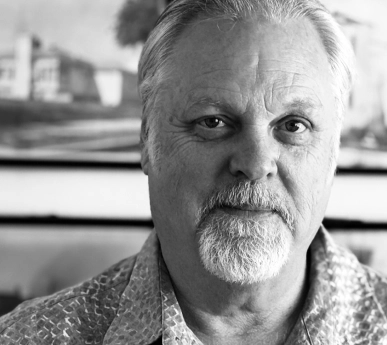
“Everything I know about architecture I know from Frank Lloyd Wright,” Aaron G. Green, FAIA, unequivocally said. However, Green was unusual among doting apprentices. He established a shared office with the master—acting as Wright’s west coast representative—while also embarking on his own projects. This very impressive volume exhaustively chronicles the architect’s work after Wright, and his further explorations into Organic architecture.
Before joining the Taliesin Fellowship in 1940, Green was the ultimate fanboy, plotting the perfect way to meet Wright—offering him a commission. By 1943, war service ended his Fellowship, but he started working with Wright again in 1951, when the senior architect suggested they open an office together in San Francisco. From 1951 to Wright’s death in 1959, Green worked on more than 30 Wright projects, including the well-known Marin County Civic Center, while also doing commissions under his own name.
After a foreword by architectural historian Alan Hess, an introduction by Wright archivist Bruce Brooks Pfeiffer, preface by Green mentee Jan Novie, the author Henning—himself an architect—gives a brief biographical overview before delving into 375 pages of project profiles, including single-family residences, houses of worship, large-scale city planning, and various commercial projects. Color and black-and-white drawings are beautifully reproduced, as are classic black-and-white photos. The quality of color photography ranges from poor to uneven, unfortunately detracting from the presentation. But in the work itself, the debt to Wright is obvious on each page, though what emerges most is Green’s life-long interpretation of the concepts of Organic architecture. As noted by Hess, Green “contributed to Organic architecture at both the macro and micro scale.” This book shows it all.