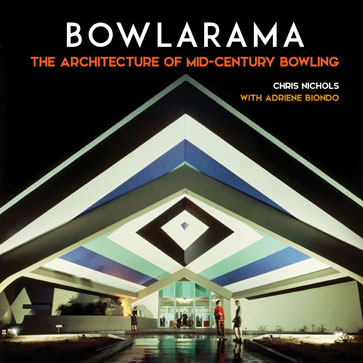
Written for Googie groupies and keglers alike, this book is a visual delight—from the matchbook endpapers to the profusely illustrated and researched pages. Renderings, archival photos, ephemera—ads, postcards, and the like—are beautifully reproduced and researched. Though branded as an architecture title and full of eye candy, the book delves into technology, culture, society, and community, as well as the typology’s rise and ultimate fall. The country’s most popular sport (it’s more of a participant than a spectator sport and it’s played by all ages), it spiked in popularity after WWII, in time to be represented by the exuberant architecture of the mid-century. The trend of “lavish pin palaces” started in California, and this casual glamour and popular luxury spread nationwide. In addition to the fanciful structures mostly exuding futuristic vibes, the signage aspect is as compelling and creative. In addition to Armet & Davis—“kingpins of Googie”—other notable Los Angeles architects designed bowling centers, including A. Quincy Jones, Paul R. Williams, and Edward Killingsworth, among others. The interiors are as imaginative as the exteriors, if not more. Themes—whether Tiki, space age, or men’s club—are really played up in the coffee shops, bars, and entertainment lounges within. Sadly, the book also chronicles the destruction of so many bowling alleys when the fad faded, many flattened for big-box retail and others transformed into strip clubs, discount stores, and even part of a housing development. From the listing of mid-century bowling centers still extant to the impressive bibliography,Bowlaramais as much of an incisive history as it is a visual pleasure.
Angel City Press, 2024, 176 pages, hardcover, $45.