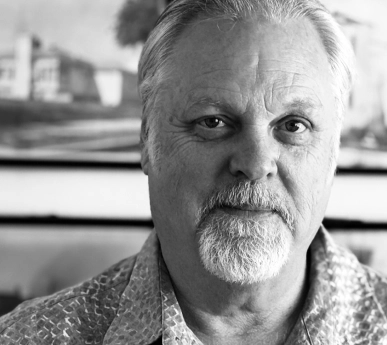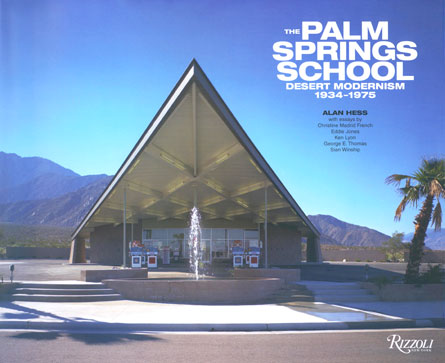
This extensive and well-researched history sets Palm Springs in a wide context of architectural history, looking at the work done in the desert from viewpoints on modernism, preservation, culture, and influence. It looks back, historically naming a “Palm Springs School,” as at the time, even though most were steeped in modernism, there wasn’t a cohesive movement. Different from other “schools,” Hess notes: “They had no charismatic leader, no dominant personality … like Frank Lloyd Wright was for the Prairie School or Paul Rudolph was for the Sarasota School. They were a college of equals addressing the same basic issues in their own individual ways.” Even so, while concerning itself with the vast range of modern architects throughout the area, the book zeroes in on the Mount Rushmore of Palm Springs architects: William F. Cody, Albert Frey, E. Stewart Williams, and Donald Wexler (I would have added William Krisel). Essays by additional historians—including SAH/SCC President Sian Winship’s “From Reservation to Real Estate Empire”—investigate various aspects of history and context.
Rizzoli, 2025, hardcover, 256 pages, $85